
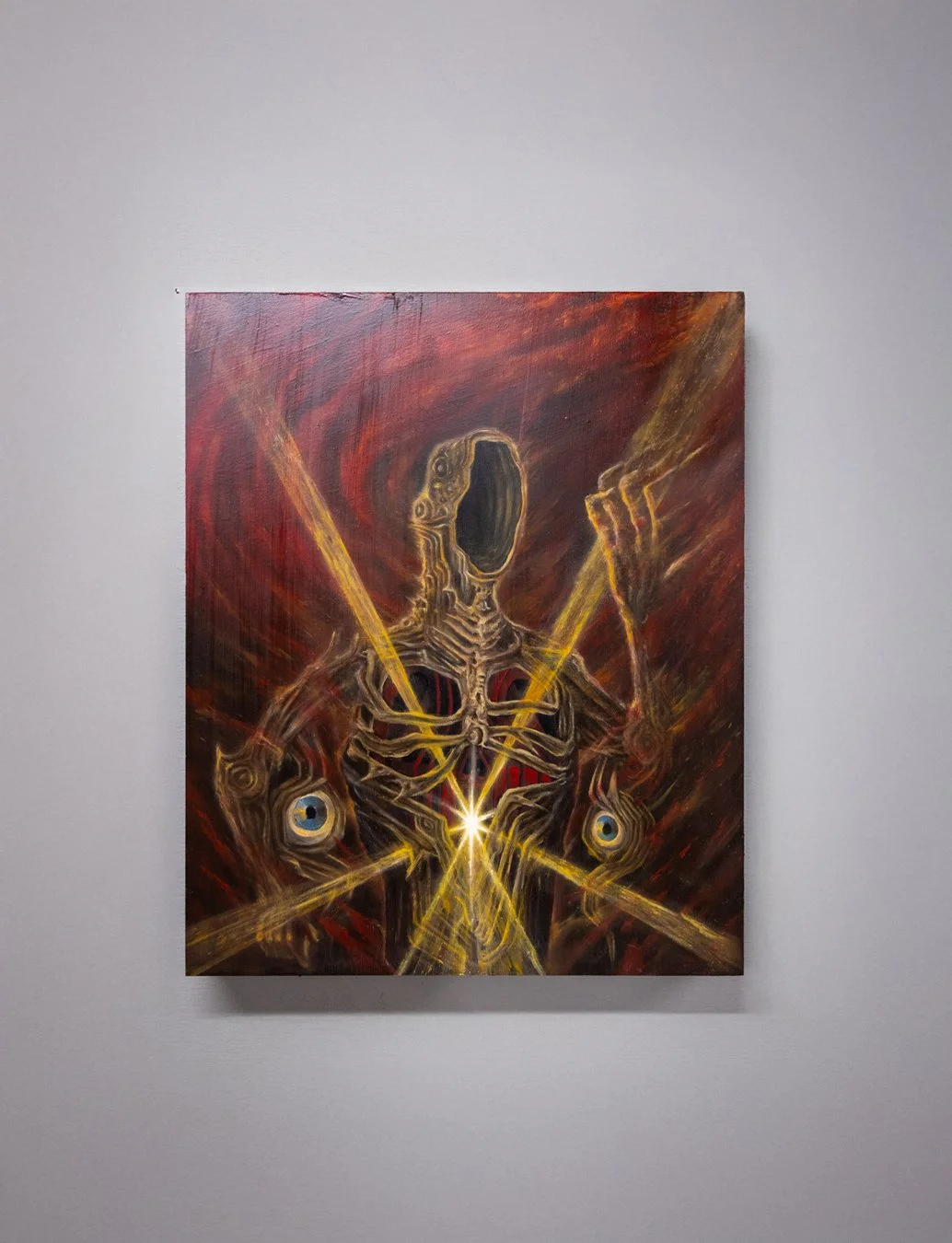
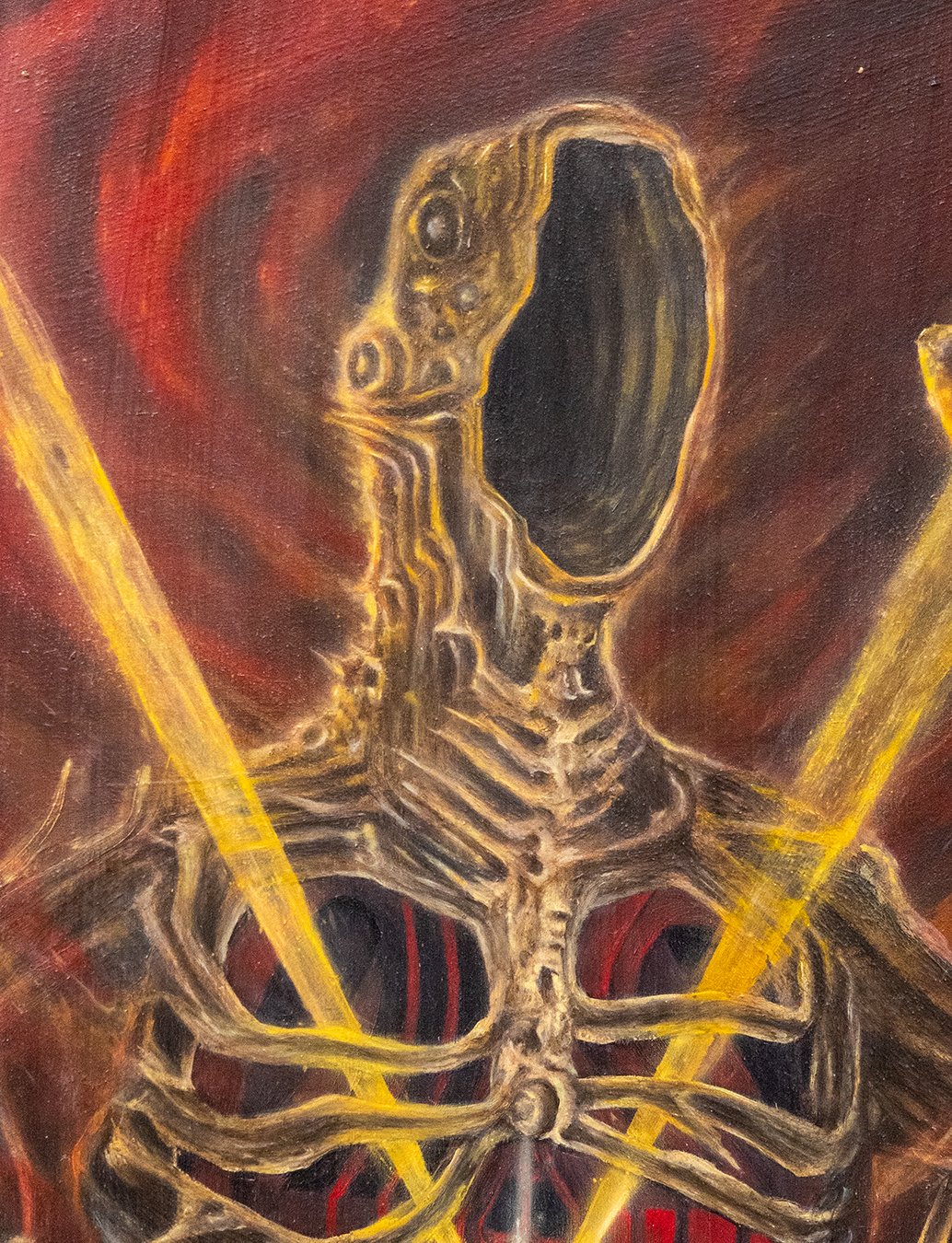
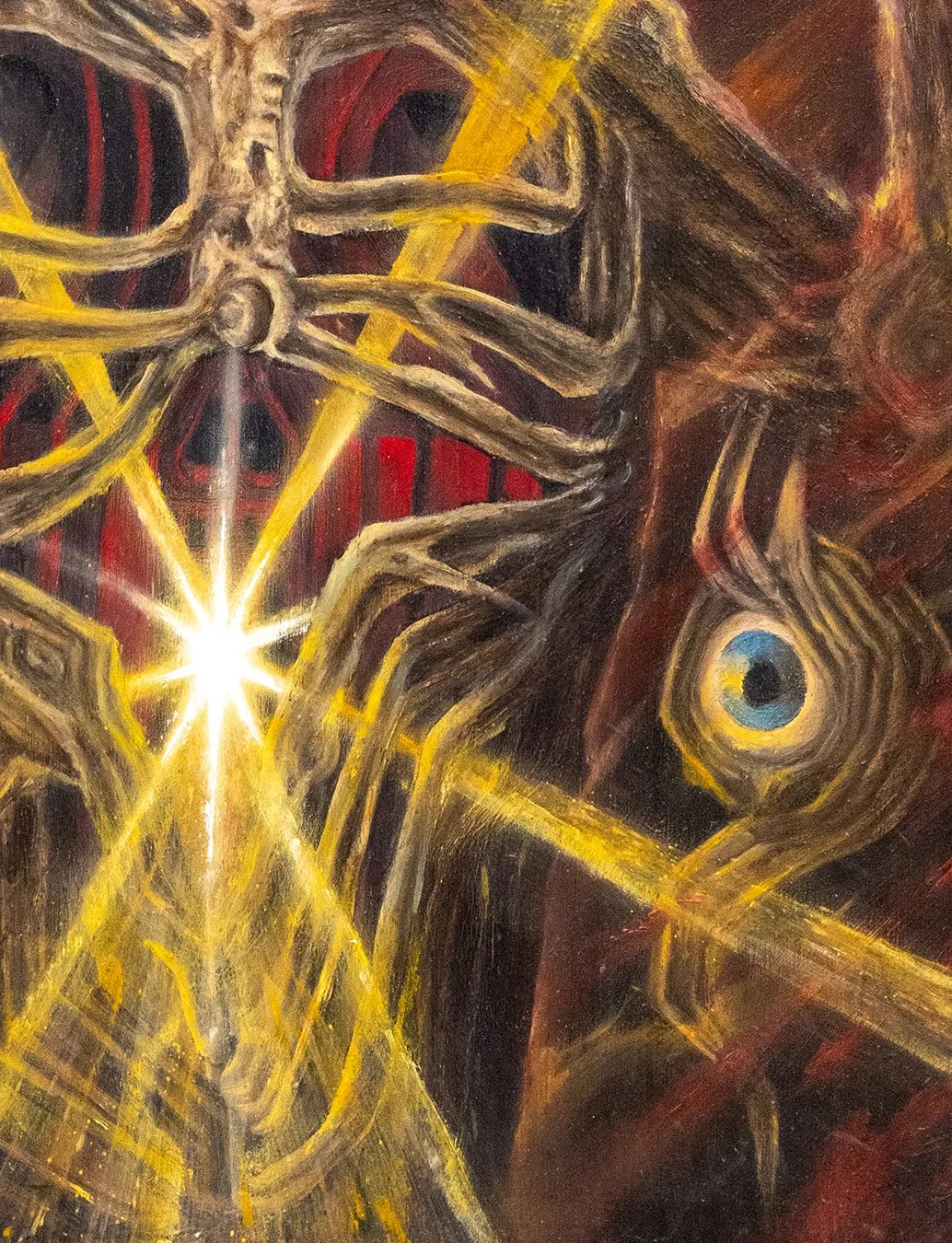
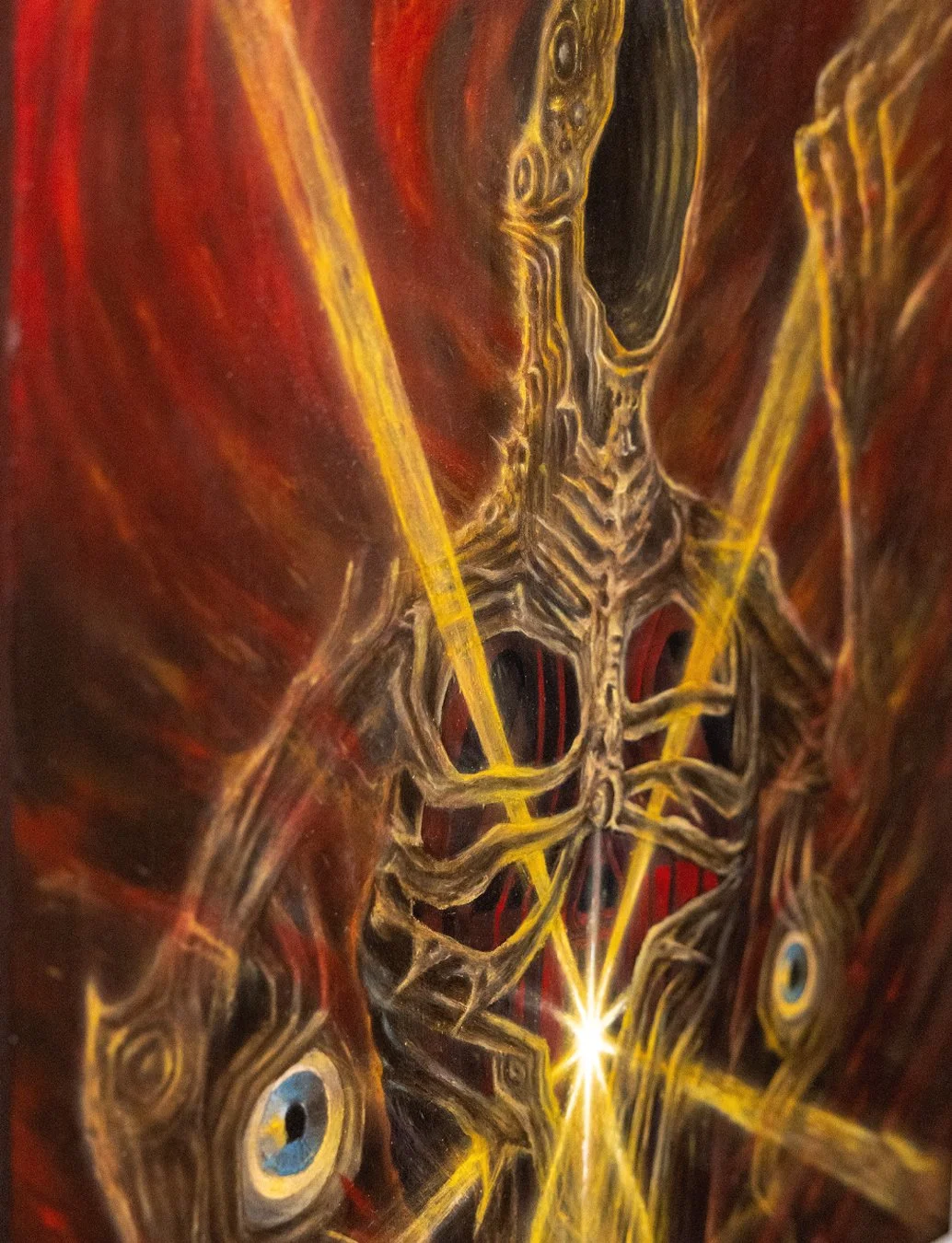
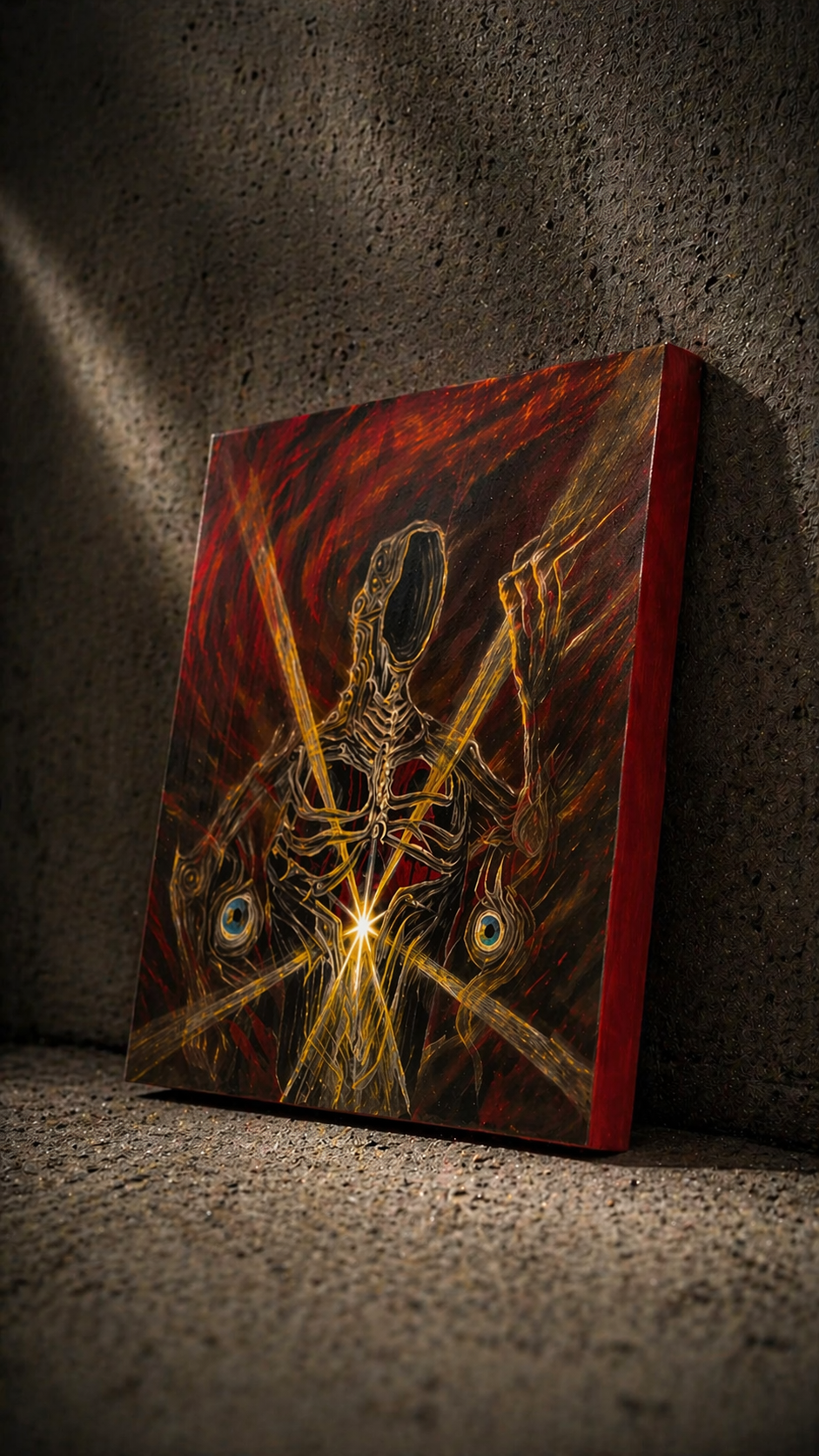
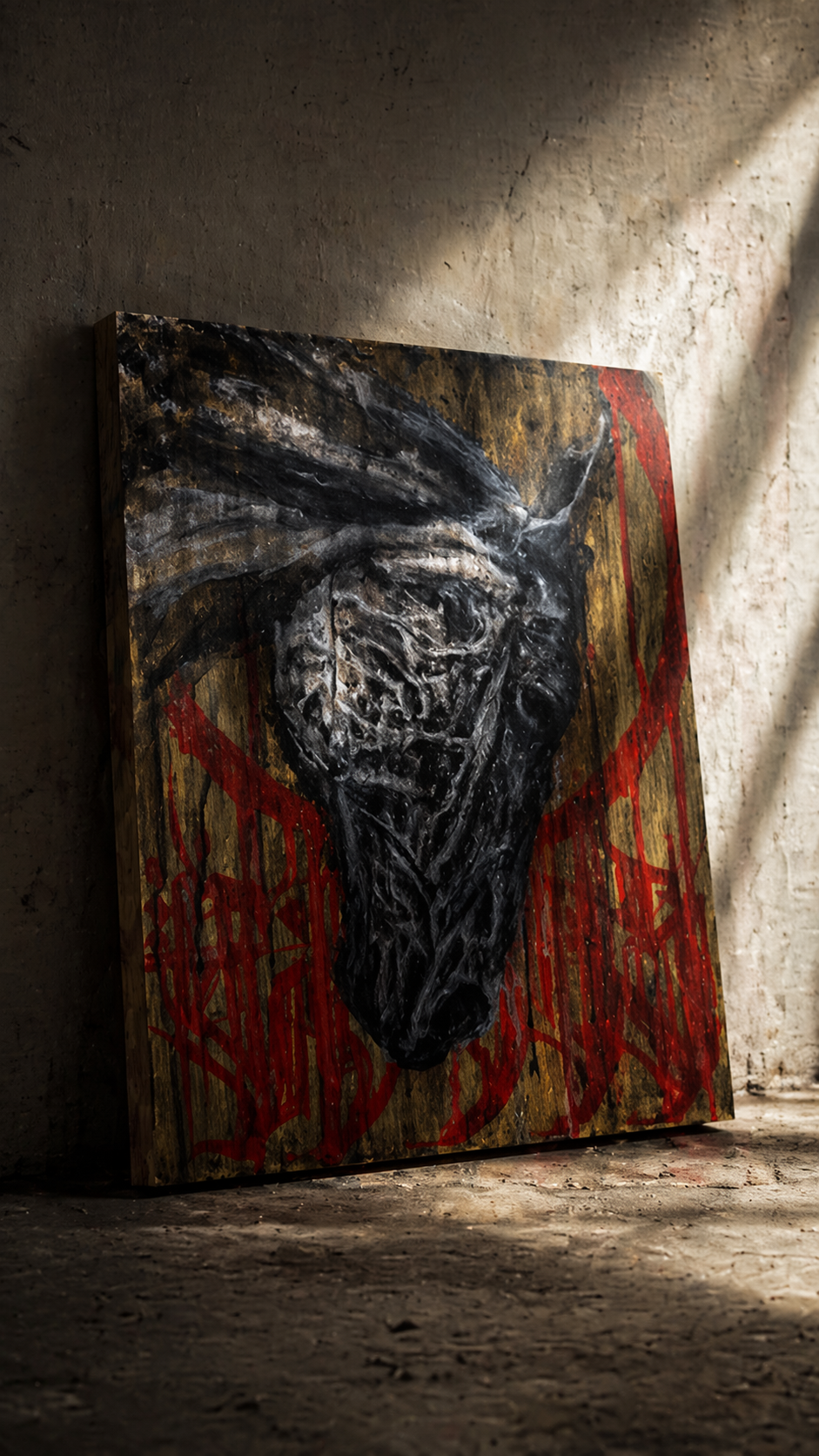
8.5 × 11 acrylic paint on wooden panel
Eqquis 1 captures the raw tension between instinct and control, with the horse emerging and dissolving through layered, gestural abstraction. The figure feels in motion—never fully fixed—suggesting a force that is both forming and breaking apart at once. Through texture, fragmentation, and negative space, the piece channels a sense of momentum and primal energy, inviting the viewer to engage with it not as a subject to define, but as something to feel in flux.
You May Also Like
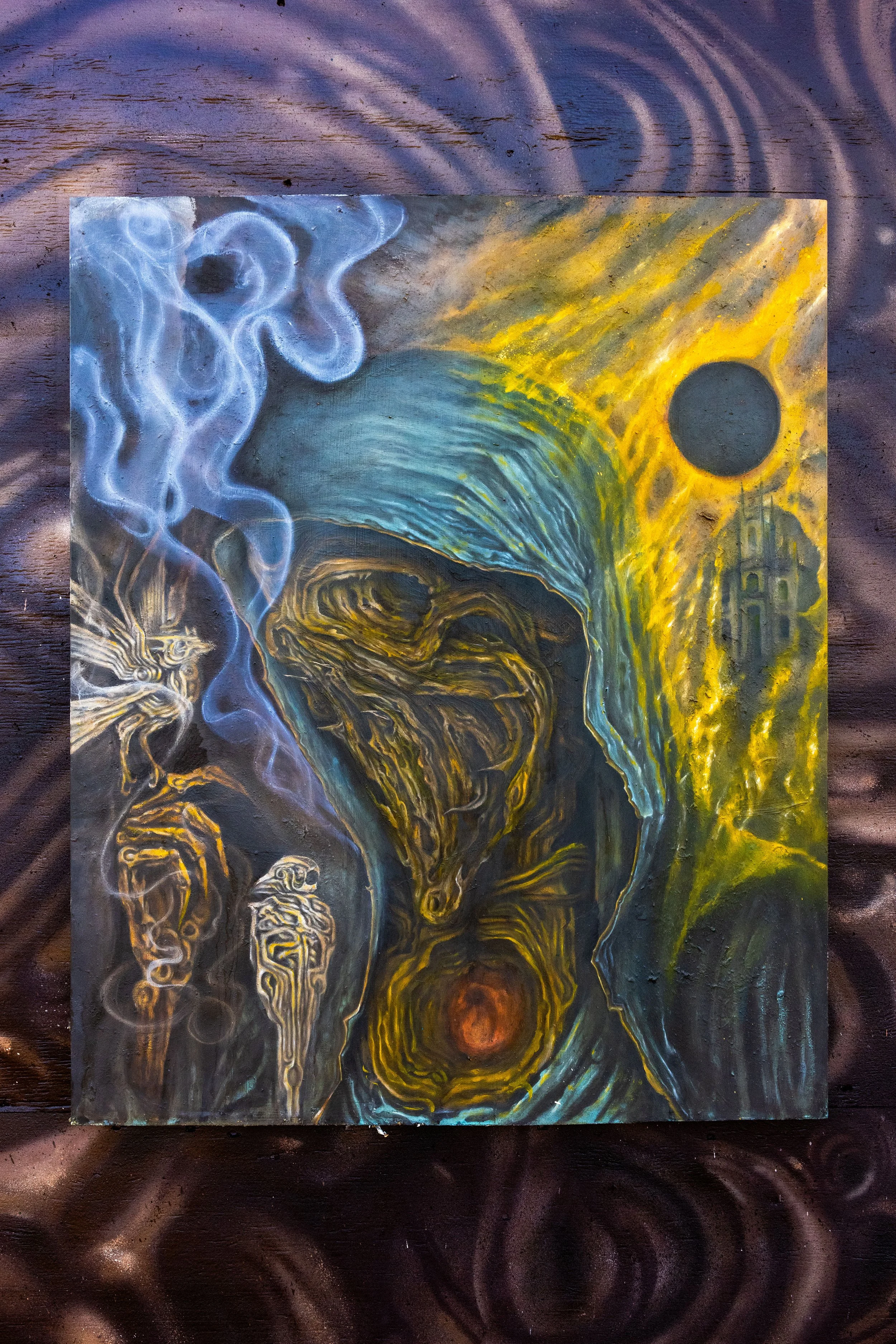
36x48 oil on wooden panel
Servator in Flamma exists within a space of fire and preservation—where destruction and guardianship collide. The composition feels forged rather than painted, with forms emerging through heat, erosion, and layered intensity. Elements flicker between structure and dissolution, suggesting a figure or presence that both withstands and is shaped by the flames around it. The work leans into themes of endurance, transformation, and inner fire—where something essential remains intact even as it is consumed. It becomes less about survival, and more about what is revealed when everything else burns away.

*these will ship end of June
A collection of four original Wombat Fire sticker designs featuring artwork and typography pulled directly from the studio's apparel and print releases.
Printed on durable weather-resistant vinyl, these stickers are built to slap anywhere
Each pack includes:
• Wombat Fire Baby Eva Sticker
• Create Decay Angel Sticker
• Create Decay Round Sticker
• Make Art Not Friends Sticker
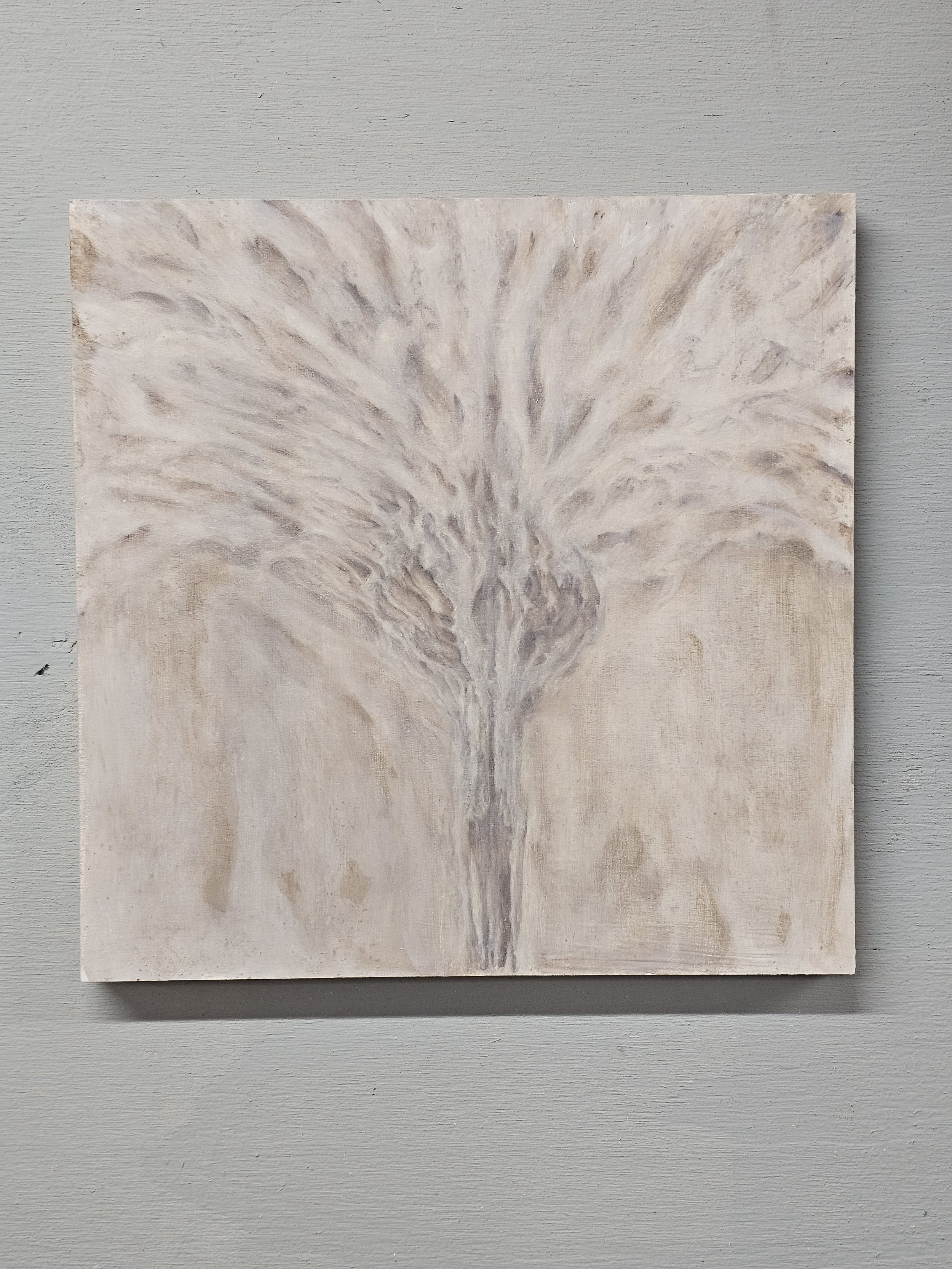
oil painting on 10×10 wooden panel
White Bone Abstraction distills form down to its most essential structure—where the suggestion of bone emerges through restraint, contrast, and negative space. The composition feels both skeletal and atmospheric, with pale forms surfacing from darker fields as if unearthed or remembered rather than fully defined. Edges dissolve, shapes fracture, and the image resists stability, creating a quiet tension between presence and absence. The work leans into themes of reduction and permanence—stripping away excess to reveal something elemental, where structure becomes both the subject and the echo of what once was.
Original paintings, murals and films
exploring the intersection of beauty,
decay and everything in between.
Original paintings, murals and films
exploring the intersection of beauty,
decay and everything in between.